Donate, Not Dumpster wrote on December 26, 2009 at 7:17am:
It's been interesting to watch Borders' PR evolve since this campaign began on Nov. 30. In her response to the below (12/24) post, Borders spokesperson Mary Davis makes it clear why Borders needs to stop trying to stonewall this issue until the store closings are over, and put out a press release pledging to work with publishers to find a way to donate the unsold books instead of destroying them.
"We will not be disposing of product as a result of the Waldenbooks store closures" is a noble sentiment, but it's hard to believe there's no possibility some books will remain unsold. It also glosses over the fact that many of the books they will be "returning" to publishers for credit will actually be stripped of covers and dumpstered. Why can't Borders use this opportunity to take a stand against its own industry's wasteful practices, and work something out so that they can be donated instead? The company needs to figure out a plan, issue a press release, and then we'll stand up and cheer Borders for doing the right thing.
It's also a contradiction of Davis' own words in response to a story about this campaign (published Dec. 16): "Please know until that team vets this issue and we decide appropriate next steps, we will hold off disposing whatever small amount of product that would normally be discarded."
http://image.examiner.com/x-32254-Orlando-Writing-Examiner~y2009m12d16-Borders-Responds-to-the-Dumpstering-Issue
It's a little like a hall of mirrors. The first responses from the company clearly stated "we do not expect to have product to donate or to dispose of" once clearance sales at the closing stores are over. Now that nearly 3,000 concerned book lovers are watching, they've admitted some books were going to be trashed all along!
In fact, the more detail Borders gives in their responses to folks who care about this issue, the more questions are raised as to whether they're committed to doing anything about it before the (now 180) Waldenbooks stores close.
After HuffPo ran a story on this campaign two weeks ago, Waldenbooks VP Pat Wynn said in response that Borders "will reconvene an existing team that we have on this issue to address it fully." Yet below, Davis describes the team this way:
"we've put together a group of individuals here at our corporate headquarters to take a look at our product disposal practices overall and see what can be done to benefit communities, while still meeting our business needs. It will take some time to examine this issue..."
This is corporate speak for, "we might do something, we might not. It depends on how big of a PR problem these pesky people who are trying to save the books become."
If Borders is serious about examining this issue to the benefit of communities, they can donate "whatever small amount of product that would normally be discarded" to local nonprofits. The company’s customers, employees, and book lovers everywhere will thank them for it.
Saturday, December 26, 2009

Thursday, December 24, 2009
Borders spokesperson Mary Davis: we will not be disposing of product
Mary McCarthy Davis: Hi everyone, This is Mary Davis with Borders. I think I have written to some of you who have contacted the company over the last few weeks.
Just want to provide a clarification to what Justin says above. We are keeping open about 20 stores within our Waldenbooks Specialty Retail chain that were slated to close by the end of January. I think Justin's post may lead many to think that all of the stores that were slated to close are staying open, but again, that is not the case, we will keep open roughly 20.
As I have said to those who have emailed -- and we've posted here on this page -- that we will not be disposing of product as a result of the Waldenbooks store closures. We have hired an outside firm that specializes in clearance sales and we have put procedures in place that will allow us to sell through all product. In the meantime, however, we've put together a group of individuals here at our corporate headquarters to take a look at our product disposal practices overall and see what can be done to benefit communities, while still meeting our business needs. It will take some time to examine this issue, but suffice it to say that your emails and posts here on this page are not at all being ignored. I hope you have a nice holiday. (December 24, 2009 at 11:39am)
Just want to provide a clarification to what Justin says above. We are keeping open about 20 stores within our Waldenbooks Specialty Retail chain that were slated to close by the end of January. I think Justin's post may lead many to think that all of the stores that were slated to close are staying open, but again, that is not the case, we will keep open roughly 20.
As I have said to those who have emailed -- and we've posted here on this page -- that we will not be disposing of product as a result of the Waldenbooks store closures. We have hired an outside firm that specializes in clearance sales and we have put procedures in place that will allow us to sell through all product. In the meantime, however, we've put together a group of individuals here at our corporate headquarters to take a look at our product disposal practices overall and see what can be done to benefit communities, while still meeting our business needs. It will take some time to examine this issue, but suffice it to say that your emails and posts here on this page are not at all being ignored. I hope you have a nice holiday. (December 24, 2009 at 11:39am)
No need to worry about tossing out books!
Justin B. Kelly: Just a little update in case people are unaware! Waldenbooks just found out they are staying open for business!!! :) so alas, no need to worry about tossing out books! (December 24, 2009 at 10:27am)
Monday, December 21, 2009
Borders throws away magazines, mass market books and Paperchase items that remain unsold
Jim Forst: Borders throws away magazines, mass market books and Paperchase items that remain unsold. They accuse employees of trying to make a buck if they bring up the word "donation". This same company wants your sympathy saying "they can't cut costs anymore". This is proof that they have potential financial solutions but remain antiquated in their thinking about how to run a corporation in this modern day and age. Keep throwing away all this product and run yourselves into the ground. (December 21, 2009 at 6:30am)
Saturday, December 19, 2009
Borders has got to be destroying the rainforest by now
Emma Mangiapane: Borders has got to be destroying the rainforest by now with the thousands of boxes of stripped books and magazines that I had to watch being NOT EVEN RECYCLED but just thrown in the dumpster with all the other garbage, in the 4 years that I spent working for the company from which I recently departed from in disgust. They could make so much more of a difference in the world by donating those books that are stripped, instead of their regular scam to pad sales by holding book drives that require customers to purchase new books in the store. (December 19, 2009 at 11:34am)
Tuesday, December 15, 2009
Response from Borders: We do not expect to have any product left from closing the stores
Nicole McClure (Topeka High) wrote on December 15, 2009 at 9:06pm:
I received this email:
I received this email:
Ms. McClure --
Thank you for writing. I want to assure you (and your students) that contrary to what has been reported on Facebook and elsewhere, we will not be disposing of books as a result of the Waldenbooks store closure process. Our company has retained an outside firm that specializes in conducting store closing/clearance sales. This firm is highly successful at selling through virtually all inventory.
For all books that cannot be sold elsewhere in our chain or returned to the publishers for credit, the company will engage in a process where product is strategically merchandised and priced for sale. If product is not selling quickly at lower volume stores, it will be shipped to higher volume stores where demand is higher and it will be sold. Inventory is continually consolidated throughout the stores that are closing and the stores are re-merchandised to continue to attract buyers. So, the fact is, we do not expect to have any product left from closing the stores. However, please know that if there is a small amount of product left over after these other measures I just explained have been exhausted, we will hold back on disposing of that product until an existing team we have on this issue is reconvened and this issue is fully examined.
Beyond the approximately 200 Waldenbooks stores that are closing, we have over time had programs where unsold books that were appropriate to be donated to schools, etc., have been provided to assist community organizations. We also hold several book drives during the year in all of our stores where we select specific charities to receive books on a local basis and have facilitated the donation of thousands and thousands of books. I hope this addresses your concerns.
Thank you,
Mary Davis
Manager, Corporate Affairs for Borders Group
Sunday, December 13, 2009
Borders manager: the dumpstered merch is not appropriate for schools
Chris Walker: Borders, please donate your books to local schools and libraries instead of dumping them. (December 13, 2009 at 1:40pm)
(Borders Store Manager) Julie Michalski: generally the only things that get dumped are out of date travel guides and trashy romance novels with a few mysteries and sci/fi fiction....none of which is appropriate for a school library. (December 14, 2009 at 3:40pm)Chris Walker: Can you please direct me to a press release, or some kind of evidence that shows what you're stating is true? (December 14, 2009 at 8:31pm)
(Borders Store Manager) Julie Michalski: What kind of press release would you like? Stating WHAT is true...that the dumpstered merch is not appropriate for schools? Ask any store manager. (December 14, 2009 at 9:01pm)
Saturday, December 12, 2009
Waldenbooks VP Pat Wynn: We will not be disposing of books
Pat Wynn: I’m the Vice President of Waldenbooks and I want to assure you that contrary to what has been reported, we will not be disposing of books as a result of the Waldenbooks store closure process. Our company has retained an outside firm that specializes in conducting store closing/clearance sales. This firm is highly successful at selling through virtually all inventory.
For all books that cannot be sold elsewhere in our chain or returned to the publishers for credit, the company will engage in a process where product is strategically merchandised and priced for sale. If product is not selling quickly at lower volume stores, it will be shipped to higher volume stores where demand is higher and it will be sold. Inventory is continually consolidated throughout the stores that are closing and the stores are re-merchandised to continue to attract buyers. So, the fact is, we do not expect to have any product left from closing the stores. (December 12, 2009 at 12:50pm)
Pat Wynn: Beyond the approximately 200 Waldenbooks stores that are closing, we have over time had programs where unsold books appropriate to be donated to schools, etc., have been donated to assist community organizations. We also hold book drives during the year in all of our stores where we select specific charities to receive books on a local basis and have facilitated the donation of thousands of books. Like all book retailers we have also disposed of some books when they couldn’t be sold—these are primarily mass market paperback books that are generally not durable enough to be donated to a library, for example. We do our best to dispose of as little product as possible— as a retailer we’d rather sell it, of course— yet just to be sure we are doing the right thing, we will reconvene an existing team that we have on this issue to address it fully. Thank you. (December 12, 2009 at 12:50pm)
For all books that cannot be sold elsewhere in our chain or returned to the publishers for credit, the company will engage in a process where product is strategically merchandised and priced for sale. If product is not selling quickly at lower volume stores, it will be shipped to higher volume stores where demand is higher and it will be sold. Inventory is continually consolidated throughout the stores that are closing and the stores are re-merchandised to continue to attract buyers. So, the fact is, we do not expect to have any product left from closing the stores. (December 12, 2009 at 12:50pm)
Donate, Not Dumpster: Hi Pat, thanks for taking the time to weigh in. Nearly two weeks after Waldenbooks employees helped start this campaign, it's nice to get a response. It's unfortunate that your fellow Borders Group executive, CFO Mark Bierley, didn’t feel customers' concerns on this issue were important enough to read before deleting.
It’s great to hear you say that you "will not be disposing of books as a result of the Waldenbooks store closure process." In that case, why were Waldenbooks employees in management positions told that unsold inventory would be dumpstered (once liquidation sales end) as part of the company's plans for the store closings? And why did they feel so certain Borders would follow through with these plans that they were willing to risk their own jobs through a campaign to alert the public?
Your comments also seem to minimize how prevalent the practice of dumpstering books is at Waldenbooks and Borders stores, as former employees have revealed.
"We do not expect to have any product left from closing the stores" is a noble sentiment, but it's hard to believe there's no possibility some books will remain unsold. It also glosses over the fact that many of the books you will be "returning" to publishers for credit will actually be stripped of covers and dumpstered. Why can't you use this opportunity to take a stand against your own industry's wasteful practices, and work something out so that they can be donated instead? Figure out a plan, issue a press release, and then we'll stand up and cheer Borders for doing the right thing. (December 12, 2009 at 2:07pm)
Pat Wynn: Beyond the approximately 200 Waldenbooks stores that are closing, we have over time had programs where unsold books appropriate to be donated to schools, etc., have been donated to assist community organizations. We also hold book drives during the year in all of our stores where we select specific charities to receive books on a local basis and have facilitated the donation of thousands of books. Like all book retailers we have also disposed of some books when they couldn’t be sold—these are primarily mass market paperback books that are generally not durable enough to be donated to a library, for example. We do our best to dispose of as little product as possible— as a retailer we’d rather sell it, of course— yet just to be sure we are doing the right thing, we will reconvene an existing team that we have on this issue to address it fully. Thank you. (December 12, 2009 at 12:50pm)
Donate, Not Dumpster: Pat, it's also great to know that you "will reconvene an existing team that we have on this issue to address it fully." We are simply calling for Borders to make a public statement pledging to work with distributors and publishers to find a way to donate any unsold books left over (in the event there are any, regardless of your commendable intentions to sell everything) instead of destroying them.
If publishers plan to destroy books you would be returning for credit, use this opportunity to take a stand against your own industry's wasteful practices, and work something out so that they can be donated instead. Your employees, customers, and book lovers everywhere will thank you for it. (December 12, 2009 at 2:09pm)
Friday, December 11, 2009
The publishing industry's whole system needs to be reorganized
Damon Brown: They cannot just give the books away and if they throw them in the dumpster intact someone will pick them out and sell them on their own creating more loss of income. The industry credit back programs usually require the front cover(with publishing info) of paperbacks and softcovers to be ripped off and sent back to the distributor. The interior is thrown away or recycled. Industry practices need to be changed but calling Waldenbooks alone will not do it. The whole system needs to be rethought, reorganized, and re-implemented. (December 11, 2009 at 5:52pm)
Donate, Not Dumpster: Damon, you're right that the publishing industry's "whole system needs to be rethought, reorganized, and re-implemented." See this post for a more detailed look at the history of book returns and why this irrational system got set up in the first place:
http://thelatestoutrage.blogspot.com/2009/12/pulping-is-publishing-industrys-dirty.html
But shining a light on the 200 Waldenbooks that are closing and spreading the word that many unsold books may be needlessly destroyed in the process is a very useful way to raise awareness about these wasteful business practices that have largely been kept hidden from the public. (December 11, 2009 at 6:44pm)
Pulping is the Publishing Industry's Dirty Little Secret
THE LATEST OUTRAGE, 12-11-09
In time for the holiday season, while you're perusing best-of-lists to find that perfect book gift for a loved one, here's something the publishing industry doesn't want you to know. By shipping books to retailers on consignment terms, then requiring the return or destruction of unsold merchandise, the publishing industry operates unlike all other manufacturers. An estimated 30 TO 40 PERCENT of books are returned by bookstores annually. Between 65 and 95 percent of returned books are pulped - destroyed by publishers.
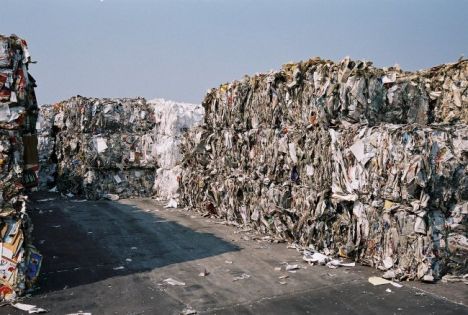
Clearly, the publishing indutry overprints on a massive scale because of returns. And the environmental impact of this pulping waste is staggering. The Canadian website Book Industry Bailout has calculated the shocking scale of trees cut and greenhouse gas emissions due to overprinting by the publishing industry in Canada. In the U.S., the environmental destruction is multiplied at least tenfold, since our publishing industry is 15 to 20 times larger.

Most big publishers would like to keep this a secret, refusing to release hard figures on their returns. Conscientious small publishers are thankfully not so quiet on the subject, especially those who have moved to publish-on-demand business models.
Reporting in the Wall Street Journal in 2005, Jeffrey Trachtenberg called returns "the dark side of the book world," and quoted Barnes & Noble CEO Steve Riggio as saying, "We'd like to see (returns) discontinued. Any rational business person looking at this practice would think the industry has gone mad." Last year, Borders executive VP Robert P. Gruen told the New York Times that "We generally support the idea of looking at potential solutions to a return system that is not working well for the industry as a whole."

According to Book Industry Bailout, the practice of publishers providing books to retailers on returnable terms only dates to the 1930s, and "began as a temporary sales gimmick by a desperate New York publisher." But the concept spread as booksellers demanded the same favorable terms from other publishers, and eventually became standard – "handicapping an entire industry for the next seven decades in an unfortunate practice that has wasted literally billions of dollars worldwide."
Nearly all non-book retailers purchase products from manufacturers or distributors at 50% or less of their retail value, mark them up, then discount the items until they sell. They can't return unsold items.

The business of selling books turns this normal practice on its head by allowing book returns of unsold books to publishers. Yet it costs money to ship returned books back. Thus was born the practice of stripping covers from books, only sending back the covers, and book stores themselves destroying the remainder of the unsold books.
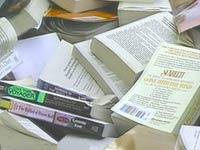
Dumpstered books behind a B. Dalton Bookseller store in Ohio, 2003
Independent book stores have far fewer returns than chains, with sell-through rates estimated at 80 percent. This suggests that smarter buying practices by stores reduce returns, and further demonstrates why overprinting is so unnecessary.
Many chain book stores do the publishers' dirty work of pulping the books for them – booksellers call it dumpstering. And when financially struggling book chains shut stores, as is happening right now with Borders closing 200 Waldenbooks locations, there is enormous pressure for management to take the cheapest way out and order employees to simply dumpster unsold books.
(By ERIK OSE)
In time for the holiday season, while you're perusing best-of-lists to find that perfect book gift for a loved one, here's something the publishing industry doesn't want you to know. By shipping books to retailers on consignment terms, then requiring the return or destruction of unsold merchandise, the publishing industry operates unlike all other manufacturers. An estimated 30 TO 40 PERCENT of books are returned by bookstores annually. Between 65 and 95 percent of returned books are pulped - destroyed by publishers.
Clearly, the publishing indutry overprints on a massive scale because of returns. And the environmental impact of this pulping waste is staggering. The Canadian website Book Industry Bailout has calculated the shocking scale of trees cut and greenhouse gas emissions due to overprinting by the publishing industry in Canada. In the U.S., the environmental destruction is multiplied at least tenfold, since our publishing industry is 15 to 20 times larger.
Most big publishers would like to keep this a secret, refusing to release hard figures on their returns. Conscientious small publishers are thankfully not so quiet on the subject, especially those who have moved to publish-on-demand business models.
Reporting in the Wall Street Journal in 2005, Jeffrey Trachtenberg called returns "the dark side of the book world," and quoted Barnes & Noble CEO Steve Riggio as saying, "We'd like to see (returns) discontinued. Any rational business person looking at this practice would think the industry has gone mad." Last year, Borders executive VP Robert P. Gruen told the New York Times that "We generally support the idea of looking at potential solutions to a return system that is not working well for the industry as a whole."
According to Book Industry Bailout, the practice of publishers providing books to retailers on returnable terms only dates to the 1930s, and "began as a temporary sales gimmick by a desperate New York publisher." But the concept spread as booksellers demanded the same favorable terms from other publishers, and eventually became standard – "handicapping an entire industry for the next seven decades in an unfortunate practice that has wasted literally billions of dollars worldwide."
Nearly all non-book retailers purchase products from manufacturers or distributors at 50% or less of their retail value, mark them up, then discount the items until they sell. They can't return unsold items.
The business of selling books turns this normal practice on its head by allowing book returns of unsold books to publishers. Yet it costs money to ship returned books back. Thus was born the practice of stripping covers from books, only sending back the covers, and book stores themselves destroying the remainder of the unsold books.
Dumpstered books behind a B. Dalton Bookseller store in Ohio, 2003
Independent book stores have far fewer returns than chains, with sell-through rates estimated at 80 percent. This suggests that smarter buying practices by stores reduce returns, and further demonstrates why overprinting is so unnecessary.
Many chain book stores do the publishers' dirty work of pulping the books for them – booksellers call it dumpstering. And when financially struggling book chains shut stores, as is happening right now with Borders closing 200 Waldenbooks locations, there is enormous pressure for management to take the cheapest way out and order employees to simply dumpster unsold books.
(By ERIK OSE)
Subscribe to:
Posts (Atom)
